
If you’ve tried the Core 5 Tapping meditations in The Tapping Solution App, you’ve likely noticed something different right away.
Each session doesn’t just start with Tapping. It starts, and ends, with a specific hand gesture.
Blowing warm air across your palms for CALM. Shaking your hands and body for RELEASE. Placing your hand on your chest for CENTER. Soft hands cupping your cheeks for SOFTEN. Rubbing your palms together for IGNITE.
They’re not just extra fluff. They’re not just warm-ups. Every one of these gestures was chosen because of what it does to your nervous system at a biological level, and because of what it becomes over time. Let me walk you through each one.
CALM: Blow Warm Air Across Your Palms
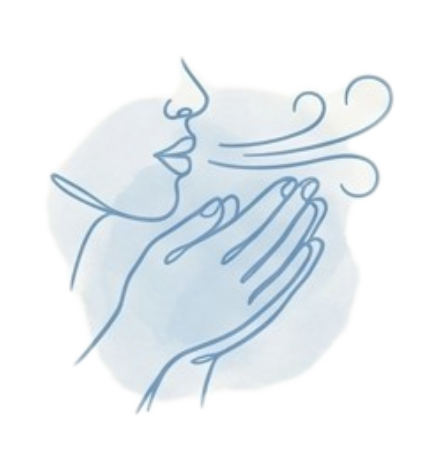
This one looks gentle. And it is gentle. But what it’s doing underneath is powerful.
When you blow warm air across your palms, you’re naturally extending your exhale. That’s not an accident, it’s the whole point.
Your vagus nerve — the main nerve of your parasympathetic nervous system — is most active during exhalation. When your exhale is longer than your inhale, it directly stimulates that nerve, sending a calming signal from your body to your brain. Researchers call this respiratory vagus nerve stimulation, and it’s one of the most well-documented ways to shift your nervous system out of fight-or-flight and into rest-and-digest.
A study published in the journal Frontiers in Human Neuroscience reviewed decades of research on this mechanism and found that slow breathing with extended exhalation consistently activates the parasympathetic nervous system and reduces sympathetic arousal.
Another study found that just two minutes of this kind of breathing significantly reduced perceived stress and improved decision-making.
The warmth matters too. The sensation of warm air on your palms creates a secondary sensory signal, which is something your nervous system can orient toward that isn’t the thing it’s alarmed about. It gives your brain something safe to land on.
So that simple act — cupping your hands, blowing warm air slowly — is simultaneously activating your vagus nerve, extending your exhale, lowering your heart rate, and giving your overactivated system a signal of safety.
That’s a lot of biology packed into something that takes about five seconds.
RELEASE: Shake It Out
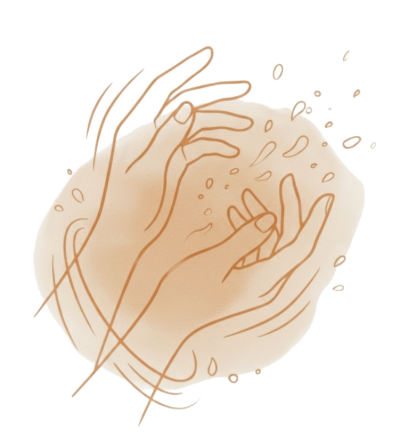
Animals don’t hold onto stress the way we do. A gazelle escaping a predator has been observed to shake, its whole body trembling for a few seconds before it walks away, seemingly reset. Dogs do it instinctively after stressful experiences. This shaking response, coined to be called neurogenic tremoring, may be the body’s built-in way of discharging stored tension and returning to balance.
Humans have the same mechanism. We’ve just been trained to suppress it. We “keep it together.” We hold it in. We power through.
The problem is, when that energy doesn’t discharge, it stays in the body. It becomes the jaw clenching, the tight chest, the irritability that seems to come out of nowhere… the emotional backlog that builds up over days and weeks.
Dr. David Berceli developed an entire therapeutic modality around this mechanism called Tension and Trauma Release Exercises (TRE). His research and subsequent studies have shown that deliberate activation of the body’s tremor response can calm the autonomic nervous system, reduce hypervigilance, and release muscular tension that’s been held for months or even years, without needing to talk about it or even name what’s being held.
Research suggests that activating the body’s natural tremor response may help calm the autonomic nervous system and reduce hypervigilance. A pilot study with caregivers found that just 10 weeks of self-induced tremoring was associated with improved quality of life, emotional resilience, and life enjoyment. Early research with adolescents suggests potential benefits for reducing anxiety and improving coping, with larger clinical trials currently underway.
When you shake it out at the beginning and end of the RELEASE session, you’re activating this same discharge mechanism. You’re telling your body: it’s safe to let go of what you’ve been carrying. The shaking isn’t some random movement. It’s a way to activate your nervous system’s natural release valve, and finally turn it back on.
CENTER: Hand on Chest
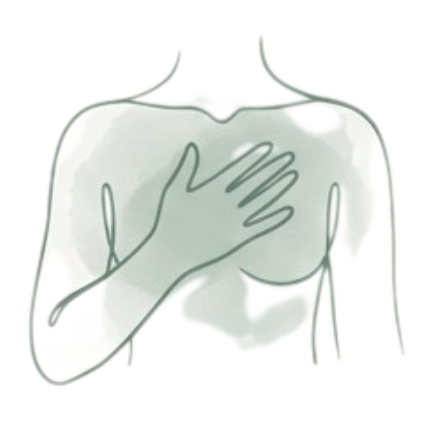
There’s a reason you instinctively put your hand on your chest when something startles you, when you hear unexpected news, when you need to steady yourself. Your body already knows what works to recenter.
Research on self-soothing touch has shown that placing your hand on your own body — especially your chest — activates several regulatory mechanisms at once.
A 2021 randomized controlled trial published in Comprehensive Psychoneuroendocrinology found that self-soothing touch gestures (like placing a hand over the heart) had a measurable buffering effect on cortisol responses to stress. The researchers identified two mechanisms: the tactile stimulation activates C-fiber receptors that stimulate vagal and parasympathetic activity, and the gesture itself creates a psychological signal of self-induced safety.
Separate neuroimaging research has shown that self-touch activates the brain’s descending pain modulatory system, a network involving the anterior cingulate cortex, amygdala, and rostral ventromedial medulla, which suppresses sympathetic nervous system activity and regulates the body’s internal state. This happens even in non-painful, non-stressful situations. The brain recognizes self-touch as a regulatory signal regardless of context.
There may also be an oxytocin component. Touch is associated with increased secretion of oxytocin, the neuropeptide linked to bonding, safety, and stress reduction, and researchers hypothesize that self-touch may trigger similar pathways.
So when you place your hand on your chest during our CENTER meditation, you’re grounding yourself through vagal activation, triggering your brain’s internal safety network, releasing oxytocin, and suppressing the sympathetic overdrive that’s making you scattered. You’re sending a signal of safety from your own body to your own brain.
It’s proprioceptive grounding, and a way for your body to tell itself: I’m here. I’m stable. I can come back to center.
SOFTEN: Soft Hands on Cheeks
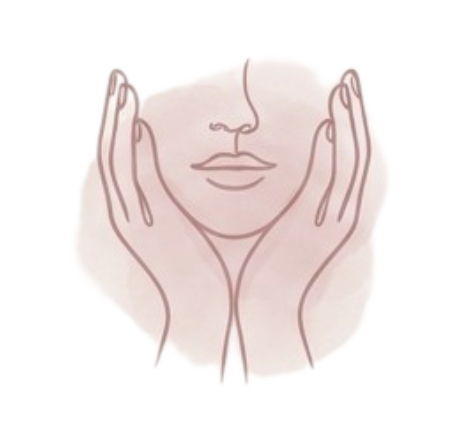
This is the most vulnerable gesture of the five. And that’s by design.
Most people don’t touch their own face gently and intentionally very often. The face is where we perform — where we hold expressions, manage impressions, present ourselves to the world. Cupping your own cheeks with soft hands breaks through that armor in a way that’s hard to achieve with words alone.
The face also has an unusually dense concentration of nerve pathways. Research on spontaneous face-touching shows that humans touch their faces up to 800 times during waking hours, and that this behavior is strongly associated with emotional regulation, self-awareness, and cognitive processing. A systematic review published in Neuroscience & Biobehavioral Reviews found that facial self-touch increases during emotionally and cognitively challenging situations and serves a self-regulatory function, helping to maintain a sense of self and manage internal states.
The dense innervation of the face means that gentle touch there creates a rich sensory signal, one that activates somatosensory processing and the brain’s internal safety system (the same descending pain modulatory network activated by hand-on-chest). But the vulnerability of the gesture adds something else: it bypasses the thinking mind entirely. You can’t cup your own cheeks softly and maintain the inner critic at the same time. The physical gesture is incompatible with self-attack mode.
That friction, the slight discomfort of being that gentle with yourself, is actually part of the mechanism. It signals to your nervous system that something different is happening. That the usual pattern of self-criticism is being interrupted. And it opens a doorway to self-compassion that trying to “think kind thoughts” often can’t.
IGNITE: Rub Your Palms Together
When your nervous system has gone into dorsal vagal shutdown (that flat, foggy, “can’t get going” state) it has essentially conserved energy by pulling you offline. Your system believes you’re under too much load, so it powers down.
To come back online, you need activation. Not aggressive, jarring activation, but gentle sensory input that tells your system it’s safe to re-engage.
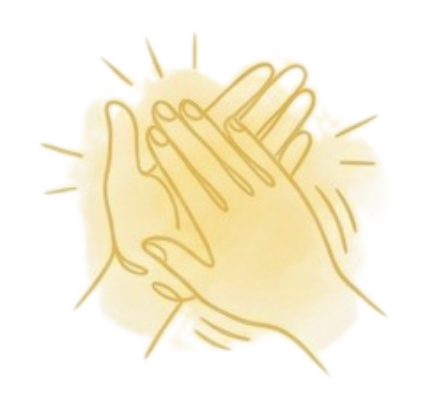
Rubbing your palms together creates friction, warmth, and bilateral sensory stimulation. The friction generates heat, which your skin’s thermoreceptors detect and relay to your brain. The bilateral movement — both hands engaged symmetrically — increases proprioceptive input, which can help wake up your somatosensory system and re-establish body awareness.
From a somatic perspective, this warmth can counteract the cold, contracted quality that often accompanies low-energy shutdown states. When your system has gone offline, your extremities may feel cold, your energy flat, your body heavy. Creating warmth with your own hands offers a direct sensory counterpoint — a physical signal that says: wake up. It’s safe to come back.
It’s also active. Unlike the other gestures that are more receptive and still, rubbing your hands together requires engagement, which is exactly what the IGNITE state needs. The gesture matches the intention: generate energy, create movement, build momentum from within.
The Breakthrough: These Hand Gestures Are Anchors
Here’s why all of this matters beyond doing the thing a few seconds once or twice in an individual session.
Every time you repeat a Core 5 session, your nervous system is building an association between that hand gesture and that state. The gesture happens at the beginning when you’re entering the state, and again at the end when you’ve achieved the shift. Over time, through repetition, your nervous system links the two.
This is the same principle as classical conditioning: a physical cue paired with a physiological response, reinforced each time you practice. In the field of somatic therapy, this is called anchoring. You use a specific physical action as a reference point that your nervous system can return to in the future.
The key insight from anchoring research is that these associations get stronger with repetition, and that they work best when the physical cue is unique and distinctive. A generic gesture like crossing your arms is too common; it’s already associated with dozens of other contexts. But blowing warm air across your palms? Cupping your cheeks? These are distinctive enough that your nervous system can build a clean, clear, strong link.
Which means over time, you don’t always need the full session.
You’re in a meeting and your chest is tight. You can’t pull out your phone and tap. But you can place your hand on your chest. And your body remembers CENTER.
The overwhelm is rising while you’re driving. You can’t close your eyes and do a session. But you can blow warm air across one palm at a red light. And your body remembers CALM.
You’re standing in the kitchen and you just can’t get going. You rub your hands together. And your body remembers IGNITE.
The gestures become a shortcut, like a portable reset that travels with you everywhere, available in any moment, even when you can’t tap.
Building the Connection
The gestures work on their own; the biological process works regardless of whether you’ve done the sessions. Blowing warm air activates your vagus nerve whether or not you’ve ever heard of the Core 5.
But they work better — significantly better — when you’ve built the association through the full sessions, and through repeat use. That’s because the gesture alone activates the biological mechanism, but the gesture plus the anchor activates the biological mechanism and the full nervous system state you’ve conditioned through practice.
It’s the difference between turning a key in a lock versus turning a key in a lock that’s already been opened a hundred times. The mechanism is the same, but the pathway is smoother, faster, and more reliable.
Even a few sessions with each Core 5 state starts to wire the connection. Your body learns fast — faster than your mind, actually. That’s the whole point of working at the body level instead of just the thinking level.
So the next time you start a Core 5 session and that gesture comes up, pay attention to it. Don’t rush through it. Really feel it. Let your body register what’s happening. Because you’re not just warming up for the session.
Instead, you’re building a vocabulary your body speaks fluently. You’re creating five physical anchors that will travel with you everywhere you go.
And the more you use them, the stronger they get. Pretty cool, right?
Ready to start building your anchors? Open the Core 5 in The Tapping Solution App and try the session that fits how you’re feeling right now.
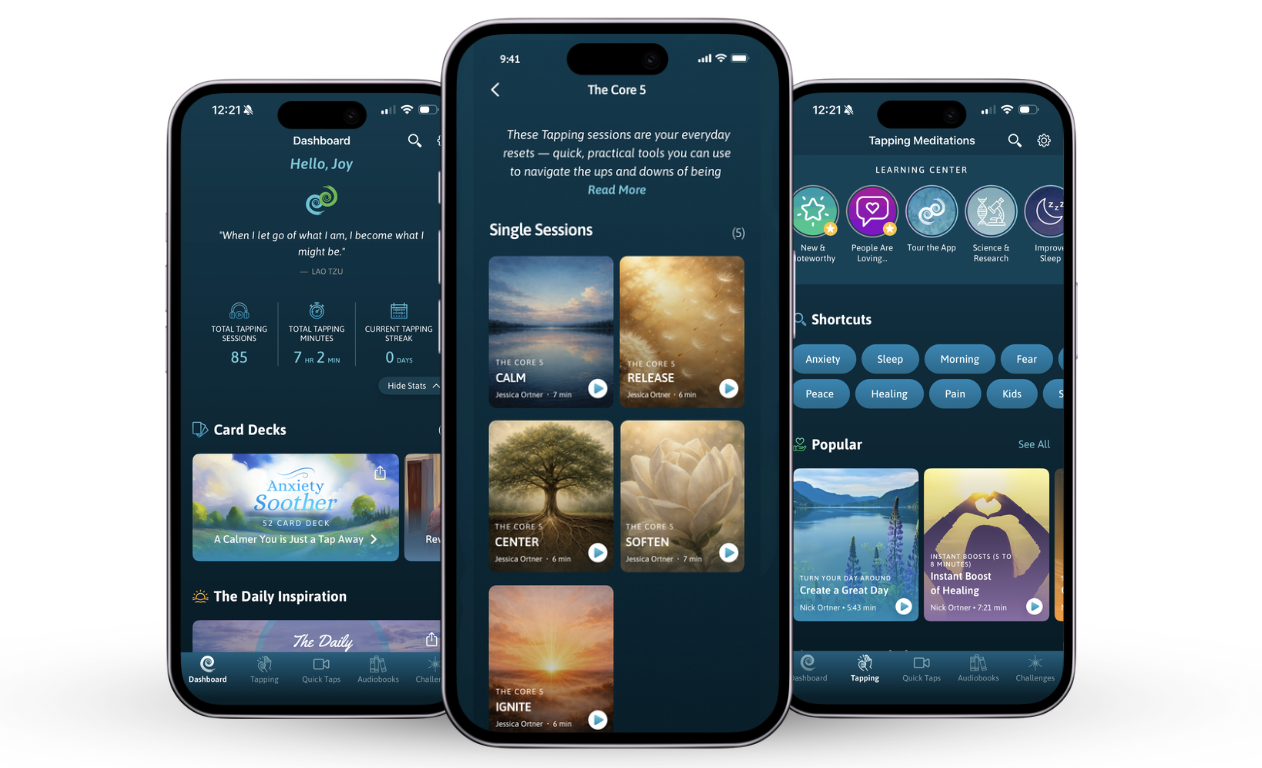
Don’t have the app yet? You can learn all about it and download it for free here.
Until next time… Keep Tapping!
Nick Ortner