Here's what I've learned after working with thousands of people in chronic pain: the pain is real. It's not "in your head." But here's what most doctors won't tell you—your emotions and your nervous system are deeply connected to how much pain you feel.
When your body is stuck in fight-or-flight mode, it amplifies pain signals. Stress creates tension. Unprocessed emotions get stored in the body. This isn't woo-woo; it's basic neuroscience.
These stories are from people who'd tried everything—physical therapy, medications, even surgery—and still hurt. Then they found Tapping.
I found out about Tapping 8 years ago in the emergency room. I was in excruciating pain. I did two full rounds of Tapping. My pain went from a 10 to a 7. Now I do it whenever I have pain.
— Lori C., ER DiscoveryIf you have been diagnosed with chronic pain or a pain-related medical condition, please work closely with your healthcare provider. The Tapping Solution App is designed for general wellness for stress management and emotional wellness. It is not intended to diagnose, treat, cure, or prevent any medical condition, and should not replace professional medical or mental health treatment. Always consult your doctor before making changes to your treatment plan.
Let me be clear about something: I'm not saying your pain isn't physical. What I'm saying is that the line between "physical" and "emotional" pain is far blurrier than we've been taught.
Your brain processes both types of pain in overlapping regions. When you're stressed, your body produces cortisol—which increases inflammation and makes you more sensitive to pain. Chronic stress keeps your muscles tense. Unresolved trauma gets literally stored in your tissues.
This is why someone can have a completely "healed" injury that still hurts. This is why pain often gets worse during stressful periods. And this is why addressing the emotional component can provide relief that purely physical treatments miss.
Tapping works by calming your nervous system while you focus on the pain. You're essentially telling your brain: "I acknowledge this pain, and it's safe to release the tension around it." It's not magic. It's neuroplasticity.
Over 962,000 Pain Relief sessions completed. Our flagship "Release General Pain" session alone has 380,000+ completions, with users dropping from 6.0 to 3.9 distress—a 2.1 point reduction.
Based on 321,040 "Release General Pain" sessions with before/after ratings. Part of 21+ million total sessions completed.
Several users have shared how Tapping became part of their daily routine for managing ongoing conditions.
Anonymous App User
"When my arthritis started I switched my Tapping around. I set up a morning practice because I found this helped me set the day better but also Tapping helped ease my pain enough to be able to move through the day."
For chronic conditions, consistency matters more than intensity. A daily practice can make the difference between managing pain and being managed by it.
The people who find lasting pain relief aren't necessarily the ones with the "simplest" conditions. They're the ones willing to explore the emotional component—to ask what their body might be holding onto, and what it would feel like to finally let it go.
If your pain level dropped by a third, what would become possible? What activities would you return to? What would you stop dreading?
— A reflection for those living with chronic pain
You don't have to understand exactly why Tapping works to give it a try. Start with one session and notice what happens in your body.
These are the sessions that helped Pam, Christine, and thousands of others finally find relief.
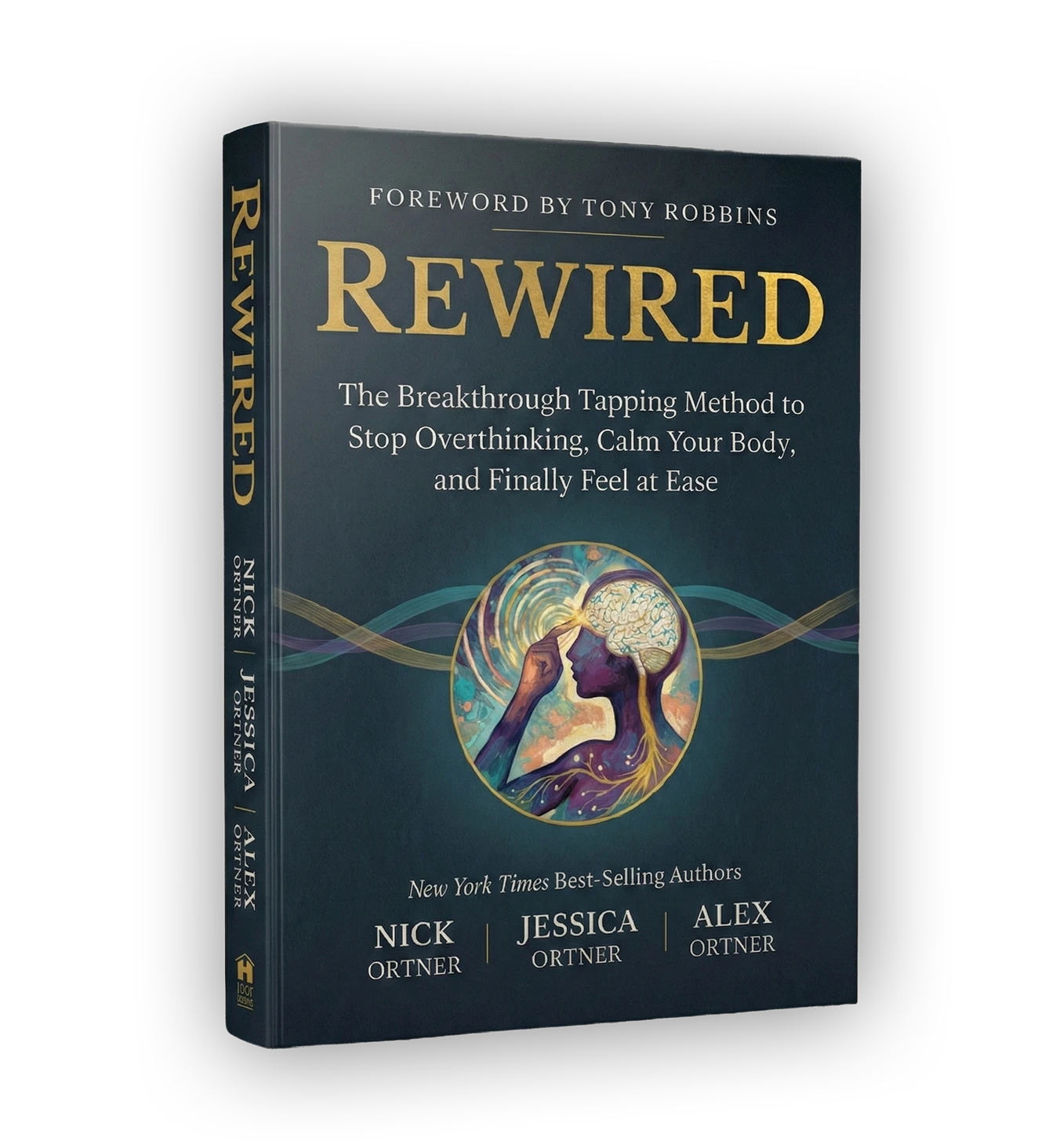
Recommended for pain:From Rewired · Chapter 14: When Your Body Doesn't Feel RightWithin 10 minutes, something astonishing happened. The pain that medications hadn't touched began to dissolve. If I could change something as 'real' as physical pain in 10 minutes, what else about myself wasn't as permanent as I believed?
Nick shares his personal origin story with Tapping and the neuroscience of how chronic pain patterns can be updated.
Yes—and there's solid science behind it. Research shows that Tapping reduces cortisol (the stress hormone) by up to 43%. Since chronic stress amplifies pain signals and creates muscle tension, reducing that stress response directly impacts how much pain you feel. This doesn't mean your pain is "imaginary." It means your nervous system plays a role in how much pain you experience—and calming that nervous system can provide real, measurable relief. Our "Release General Pain" session has over 380,000 completions with consistent stress reduction across users.
Your brain processes emotional and physical pain in overlapping regions—this has been shown in brain imaging studies. When you're stressed, anxious, or carrying unresolved emotions, your nervous system stays activated in fight-or-flight mode. This creates real physical effects: increased inflammation, chronic muscle tension, heightened pain sensitivity. Your body is essentially on high alert, amplifying every pain signal. This is why pain often worsens during stressful periods, and why addressing the emotional component can provide relief that purely physical treatments miss.
People report relief from many types of pain: back pain, neck and shoulder tension, headaches and migraines, fibromyalgia, arthritis, chronic pain conditions, and post-surgical pain. Tapping seems especially effective for pain that has an emotional component or hasn't responded well to conventional treatments. If your pain gets worse when you're stressed, or if doctors haven't been able to fully explain or treat it, there's a good chance the nervous system component is significant. That said, Tapping isn't a replacement for medical care. It's a powerful complement—especially for the aspects of pain that medicine often overlooks.
Absolutely not. Tapping works alongside other treatments, not instead of them. Keep working with your doctors, physical therapists, and other healthcare providers. Think of Tapping as addressing a dimension of pain that other treatments often miss—the nervous system and emotional components. It's not about choosing one approach over another; it's about having more tools in your toolkit. Many people find that Tapping enhances their other treatments. When your nervous system is calmer, physical therapy might be more effective. When you're less stressed, your body heals better.
Many people notice some shift in their first session—often a softening of the pain, a release of tension, or at least a change in how they're relating to the pain. Our app data shows immediate reductions in distress levels for most users. For chronic pain that's been building for years, lasting change usually comes from consistent practice. Daily Tapping helps keep your nervous system regulated, while also allowing you to work through deeper layers of stored tension and emotion. Some people experience dramatic relief quickly. Others notice gradual improvement over weeks. The key is to start and be consistent.
Important Notice: The Tapping Solution App is intended for general wellness purposes, including stress management and emotional wellness support. It is not intended to diagnose, treat, cure, or prevent any disease or medical condition. If you have been diagnosed with a medical or mental health condition, please consult with your healthcare provider. This app is not a substitute for professional medical advice, diagnosis, or treatment.