I know what it's like when anxiety takes over. When you wake up with dread for no reason. When your mind spins through worst-case scenarios faster than you can catch them. When people tell you to "just calm down" and you want to scream because if you could, you would.
The thing about anxiety is that it's not a thinking problem—it's a nervous system problem. Your body is stuck in fight-or-flight, and no amount of rational thinking can convince it you're safe.
These stories are from people who finally found something that worked—not by fighting their anxiety, but by calming the alarm system that was causing it.
Meditation was always something I struggled with, my racing mind just never wants to stop. With Tapping that changed.
— Marianne P., App UserIf you have been diagnosed with anxiety disorders (including Generalized Anxiety Disorder or Panic Disorder), please work closely with your healthcare provider. The Tapping Solution App is designed for general wellness for stress and anxiety management. It is not intended to diagnose, treat, cure, or prevent any medical condition, and should not replace professional medical or mental health treatment. Always consult your doctor before making changes to your treatment plan.
Here's what's actually happening when you're anxious: your amygdala—the brain's alarm system—has gotten stuck in the "on" position. It's scanning for threats constantly, even when there aren't any.
This isn't a character flaw. It's not weakness. It's biology. Your nervous system learned at some point that the world wasn't safe, and now it won't let its guard down. Every stressful email, every unexpected sound, every uncertain situation confirms its belief that danger is everywhere.
That's why telling yourself "there's nothing to worry about" doesn't work. Your thinking brain knows that. But your amygdala doesn't care what you think—it responds to signals, not logic.
Tapping works because it sends those calming signals directly to your amygdala. You're not trying to think your way out of anxiety. You're giving your body the message it's been waiting for: "The threat isn't real. You can stand down."
Over 1.8 million Releasing Anxiety sessions completed, with users starting at 6.8 stress and dropping to 4.1—a 2.7 point reduction per session.
Based on 1,061,379 sessions with before/after stress ratings
Many people use Tapping to interrupt panic attacks in progress—the physical act gives your racing mind something to focus on while calming your nervous system.
Anonymous App User
"I had a panic attack at work that was very intense. I was stuck on the ground convulsing. I was going down my list of coping mechanisms, and when I was finally in a good spot I put on the Tapping meditation for anxiety and finally was able to lay still."
This is what we hear often—tapping as the tool that works when nothing else does. The user added: "TAPPING WORKS. You owe it to yourself to invest in YOU."
People don't just feel less anxious—they feel more present. They notice their racing thoughts quieting. They describe physical tension releasing from places they didn't know they were holding it. The common thread: Tapping helps them regulate their nervous system in a way nothing else had.
Memory reconsolidation allows the emotional significance of a past event to be changed, reducing its power to trigger anxiety in the present.
— Dr. Peta Stapleton, Clinical Psychologist
You don't have to understand exactly why Tapping works to try it. Start with one session and notice what happens in your body.
These are the sessions that helped Erikka, Andrea, and 1.8 million others finally find calm.
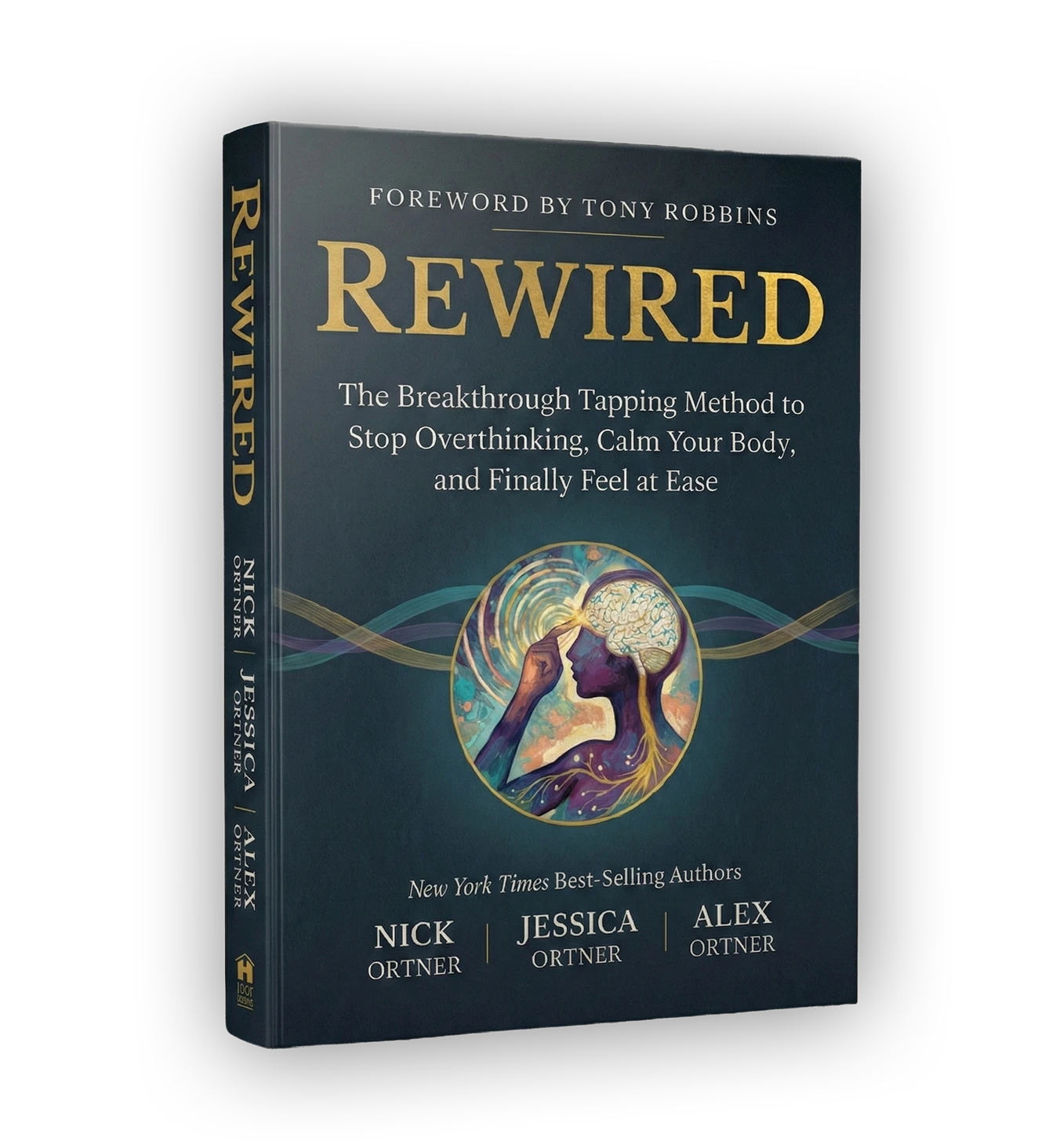
Recommended for anxiety:From Rewired · Chapter 5: When Your Mind Won't Shut UpThat anxiety that hijacks your body before presentations? It can release.
We explain why your brain gets stuck in threat mode and the exact process for rewiring your nervous system for calm.
Tapping sends calming signals directly to your amygdala—the part of your brain that triggers the fight-or-flight response. When you tap on specific acupressure points while acknowledging your anxiety, you're essentially telling your nervous system: "I see this worry, and it's safe to let it go." Research shows this produces measurable biological changes—cortisol drops by up to 43%, heart rate variability improves, the stress response deactivates. You're not just distracting yourself from anxiety; you're actually calming the alarm system that's causing it.
Many people use Tapping to interrupt panic attacks in progress. The physical act of Tapping gives your racing mind something to focus on while simultaneously calming your nervous system. It's not about fighting the panic—that usually makes it worse. It's about signaling to your body that the threat isn't real, even when every sensation is screaming that it is. For best results, practice Tapping when you're not panicking so the technique becomes familiar. Then when panic hits, your body knows what to do.
Traditional meditation asks you to quiet your mind. But an anxious mind doesn't want to be quiet—it's scanning for threats. Trying to force it into stillness can actually increase anxiety for some people. Tapping works differently. Instead of fighting your anxious thoughts, you acknowledge them while physically calming your nervous system through the Tapping. You're not trying to empty your mind; you're giving it something productive to do while your body settles down. Many people who've struggled with meditation for years find Tapping immediately accessible.
Absolutely. Tapping works alongside medication and therapy, not instead of them. Many people use all three—the medication helps manage symptoms, therapy provides insight and processing, while Tapping addresses the underlying nervous system patterns. Some therapists even incorporate Tapping into their practice. If you're in therapy, you might mention Tapping to your therapist—they may have insights on how to integrate it with your current treatment.
Absolutely not without talking to your doctor first. Tapping works alongside medication, not instead of it. Many people use both—the medication helps manage symptoms while Tapping addresses the underlying nervous system patterns. Some people eventually work with their doctors to reduce medication as their nervous system becomes more regulated through Tapping. There's no "right" answer—it depends on your individual situation and should always involve your healthcare provider. Never stop or change medication based on how you're feeling after Tapping without medical guidance.
Important Notice: The Tapping Solution App is intended for general wellness purposes, including stress management and emotional wellness support. It is not intended to diagnose, treat, cure, or prevent any disease or medical condition. If you have been diagnosed with a medical or mental health condition, please consult with your healthcare provider. This app is not a substitute for professional medical advice, diagnosis, or treatment.