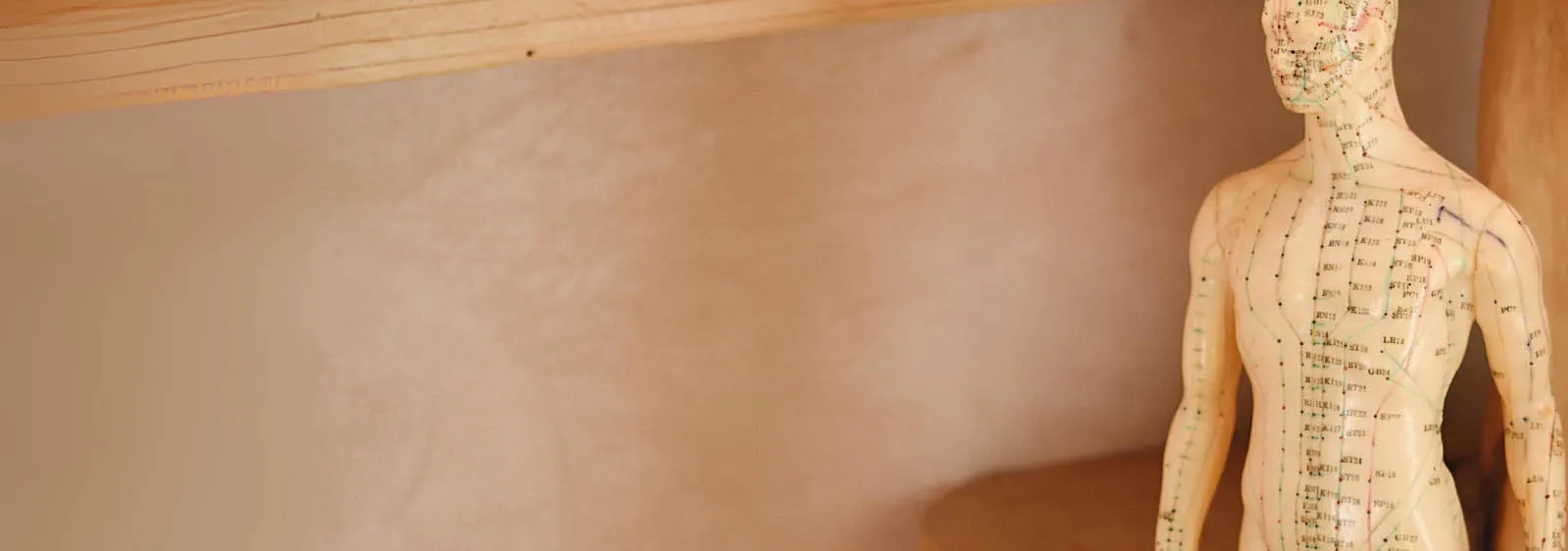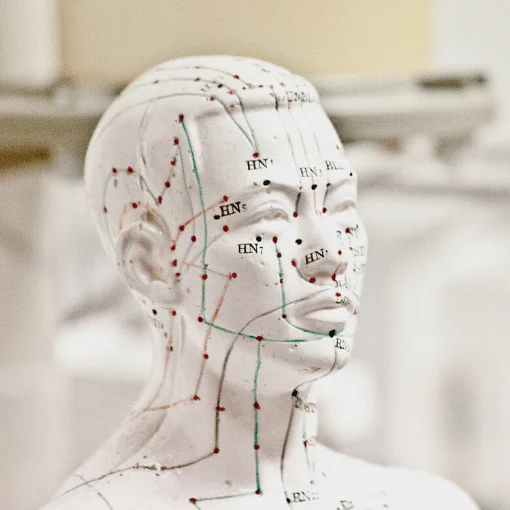
Learn the main and alternative meridian tapping points of the body
I often get asked why we use certain tapping points on the body and what alternatives exist. Maybe a person doesn't want to touch their face or simply can't reach a specific meridian point due to a disability. Then there's also usually a follow-up question about why we tap on certain points and what they do.
So here we'll cover all of that information in one place, plus a quick-reference table and a full step-by-step round, so that everyone can benefit!
If you're brand new to this, our complete guide to EFT tapping covers the points, the process, and the evidence.
Our Traditional Tapping Sequence
As you may know, Tapping or EFT (Emotional Freedom Techniques) is based on Chinese acupuncture/acupressure, and there are a LOT of points along the body where these meridians can be accessed.
Gary Craig (the originator of EFT) took a certain number of these points and created an easy-to-learn and repeatable protocol that could be applied to nearly every situation for tapping.
There was also a "shortcut" version of that original protocol, which I (and many others) adopted and began to use, and it's the sequence of tapping points you see and hear us use today at The Tapping Solution.
Download the Diagram Here
This is the sequence we traditionally use with all of our tap-along videos, scripts, and meditations.
Once you read through their descriptions and their significance when it comes to releasing emotional distress, you'll quickly realize how powerful this sequence is.
KC: Karate Chop (Small Intestine Meridian)
Why we use it: Releases feeling stuck and promotes ease in moving on, letting go, healing from grief, and ability to be happy in the present moment.
EB: Eyebrow (Bladder Meridian)
Why we use it: Releases trauma, hurt, and sadness and promotes peace and emotional healing.
SE: Side of the Eye (Gall Bladder Meridian)
Why we use it: Releases resentment and anger and promotes clarity and compassion.
UE: Under the Eye (Stomach Meridian)
Why we use it: Releases fear and anxiety and promotes contentment, calmness, and the feeling of safety.
UN: Under the Nose (Governing Vessel Meridian)
Why we use it: Releases shame and powerlessness and promotes self-acceptance, self-empowerment, and compassion for self and others.
CH: Chin/Under the Mouth (Central Meridian)
Why we use it: Releases confusion and uncertainty and promotes clarity, certainty, confidence, and self-acceptance.
CB: Collarbone (Kidney Meridian)
Why we use it: Releases the feeling of being stuck and promotes ease in moving on, confidence, and clarity.
UA: Under the Arm (Spleen Meridian)
Why we use it: Releases guilt, worry, and obsessing and promotes clarity, confidence, relaxation, and compassion for self and others.
TH: Top of the Head (Crown Chakra)
Why we use it: This is not one particular point, rather its a collection of many meridian points. Tapping on the top of the head opens the crown chakra and promotes spiritual connection, while “anchoring in” the new balance and alignment from the completed tapping round.
Alternative Tapping Points
In the sequence above, you can see that there are a lot of tapping points on the face. But what if you don't want to put your hands near your eyes or mouth? Or what if a disability prevents you from reaching some of these points?
Well, here are some alternative points on the body and the hands. You can use them in any order you feel comfortable and can be used separately or in addition to the tapping sequence above.
These points are great if you can't reach some of the other tapping points, you want to avoid touching your face, or if you simply want to be more discreet while tapping.
Just like the other meridian points above, they are symmetrical on both sides of the body.

Download the Diagram Here
Thymus (Seat of the Immune System)
Benefits: Tapping this point activates and balances the immune system, so it’s great to tap on this point daily to keep your physical health in tune. Tapping the thymus point at the end of an EFT round also helps "anchor in" the new balance and alignment throughout your body.
Sore Spot, or Soft Spot (Neurolymphatic Reflex)
Benefits: Rubbing this area gently with light pressure releases lymphatic congestion. You can begin your tapping sequence with this point while saying your setup statements in place of using the karate chop point.
Ribs (Liver Meridian)
Benefits: Releases anger and other primitive emotions and promotes compassion, happiness, safety, acceptance, transformation, and peace.

Download the Diagram Here
Karate Chop (Small Intestine Meridian)
Benefits: Releases feeling stuck and promotes ease in moving on, letting go, healing from grief, and the ability to be happy in the present moment.
Thumb (Lung Meridian)
Benefits: Releases negative thinking, judgment, self-righteousness, grief, and loss and promotes acceptance of self and others, healing from loss, ability to see the positives in life.
Index Finger (Large Intestine Meridian)
Benefits: Releases the difficulty of forgiving yourself and letting go of past hurts and promotes self-forgiveness, releasing the past, and being more joyful and peaceful in the present.
Middle Finger (Circulation-Sex Meridian)
Benefits: Releases anxiety and sexuality issues and promotes bonding, relaxation, generosity, acceptance of self and others, and trust.
Pinky Finger (Heart Meridian)
Benefits: Releases smaller anger, annoyances, and frustrations and promotes unconditional love, forgiveness, compassion, and self-care.
Gamut Point (Triple Warmer Meridian)
Benefits: Releases repetitive thinking, obsessing, and worry and promotes hope, the calmness of mind, clarity, and connection with positive possibilities.
Wrist
Benefits: There are actually a few meridian points that can be accessed by tapping the inside of the wrists. Doing so releases anxiety and depression and can aid in reducing insomnia and heart issues.
Meridian point descriptions courtesy of: www.free-flow-coaching.com, www.theenergytherapycentre.co.uk/eft-tapping-points/, eft-reiki.com/eft_tapping_point_positions.html.
Free. The best place to start.
Want to learn tapping from the people who know it best?
The Tapping World Summit has taught tapping to people all over the world since 2009. Ten days, 24 of the world's leading tapping teachers, 100% free.
Join the free summitQuick Reference: Every Tapping Point at a Glance
Here's the whole sequence and its alternatives in one table: the 9 traditional points plus the optional add-ons covered above. Meridian theory comes from traditional Chinese medicine, not a medically verified anatomical system. The point locations themselves are simply where we tap. For more on the meridian system behind these points, see our complete guide to meridian points.
| Point | Meridian | Location | Core round or optional? |
|---|---|---|---|
| Karate Chop (KC) | Small Intestine | Fleshy outer edge of the hand, between the base of the pinky and the wrist | Core (setup statement) |
| Eyebrow (EB) | Bladder | Start of the eyebrow, just above and to the inside of the eye | Core |
| Side of the Eye (SE) | Gallbladder | Bone bordering the outside corner of the eye | Core |
| Under the Eye (UE) | Stomach | Bone directly under the pupil | Core |
| Under the Nose (UN) | Governing Vessel | Small area between the base of the nose and the top lip | Core |
| Chin (CH) | Central Vessel | Crease midway between the bottom lip and the point of the chin | Core |
| Collarbone (CB) | Kidney | An inch down and an inch out from the U-shaped notch where the collarbones meet | Core |
| Under the Arm (UA) | Spleen | About four inches below the armpit, roughly in line with a bra strap or nipple | Core |
| Top of the Head (TH) | Governing Vessel / a crossing point of several meridians | Crown of the head | Core |
| Gamut Point | Triple Warmer | Back of the hand, in the dip between the ring finger and pinky knuckles | Optional |
| Wrist | Several crossing meridians | Inside of either wrist | Optional |
| Thumb | Lung | Outer edge of the thumb, at the base of the nail | Optional (finger points) |
| Index Finger | Large Intestine | Outer edge of the index finger, at the base of the nail | Optional (finger points) |
| Middle Finger | Circulation-Sex (Pericardium) | Outer edge of the middle finger, at the base of the nail | Optional (finger points) |
| Pinky Finger | Heart | Outer edge of the pinky finger, at the base of the nail | Optional (finger points) |
| Ribs (Liver Point) | Liver | A few inches below the nipple line, along the ribs | Optional |
| Thymus/Sore Spot | Neurolymphatic reflex point | Upper chest, a few inches below the collarbone notch | Optional (alternate setup spot) |
A Full Round: Setup Statement Plus the 8-Point Sequence
If you want to try the traditional sequence right now, here's exactly how a round goes:
- Name what's bothering you and rate it 0 to 10. Be specific: "this tension in my shoulders," not "stress" in general.
- Tap the karate chop point and say your setup statement, 3 times: "Even though I have this [problem], I deeply and completely accept myself."
- Say it again, tapping the karate chop point, a second time: "Even though I have this [problem], I deeply and completely accept myself."
- Say it a third time, still tapping the karate chop point: "Even though I have this [problem], I deeply and completely accept myself."
- Eyebrow. Tap 5 to 7 times while saying a short reminder phrase, like "this tension."
- Side of the eye. Same reminder phrase, same tapping.
- Under the eye. Keep repeating the reminder phrase.
- Under the nose. Stay with the reminder phrase.
- Chin. Keep tapping and repeating.
- Collarbone. Same pattern.
- Under the arm. Same pattern.
- Top of the head, then breathe and re-rate the feeling 0 to 10. If it's still above a 2 or 3, do another round on what's left.
That's one full round, start to finish, in about a minute. Want the exact wording explained in more depth? Our guide to EFT tapping phrases breaks down setup statements and reminder phrases for dozens of situations, and the 9-point tapping chart covers the core sequence in more depth.
Common Mistakes with the Tapping Points
- Skipping the setup statement. Jumping straight to the eyebrow point without the 3 rounds of setup statement at the karate chop point skips the part where you name the problem and accept yourself anyway, which is doing real work, not just filling time.
- Mixing up eyebrow and side of the eye. The eyebrow point is at the inner start of the brow; side of the eye is the bone at the outer corner. They're close together, and it's easy to tap one when you mean the other. Either works; just be consistent within a round.
- Treating the alternative points as a lesser version. The wrist, gamut, and finger points aren't a "consolation prize" for people who can't do the full sequence. They're a real, complete option if you can't reach your face, don't want to be seen tapping, or a disability makes the traditional points hard to reach.
- Tapping too lightly, or too hard. Aim for firm enough to feel it clearly, about the pressure of tapping someone's shoulder to get their attention. It should never hurt or leave a mark.
- Overthinking which meridian you're on. You don't need to remember that the under-eye point sits on the Stomach meridian to get the benefit of tapping there. The location matters; the meridian name is background, not a requirement.
What Our Data Shows
There's no single app session built just around "the tapping points" as a topic, since they're the mechanic underneath every session in the app. But the numbers on getting comfortable with the points and the basic sequence are strong. Across the 7 sessions in our Getting Started category (239,422 completions), users' self-rated distress drops from an average of 6.1 to 3.5, a 42% drop, in a single sitting. Our own Intro to Tapping and The App session, which walks new users through each point on screen as they tap along, has been completed 41,742 times, with ratings dropping from 5.6 to 4.2. And in a peer-reviewed study of 270,461 Tapping Solution App users, a single guided session lowered self-rated anxiety by 44% and stress by 45% (Church & Stapleton, 2020, JMIR mHealth and uHealth).
It's also a fair question whether tapping these specific points matters, versus just tapping anywhere while thinking about a problem. A randomized dismantling study answers that directly: university students under stress were split into two groups, one tapping the real acupressure points used in EFT, the other tapping points that aren't part of the meridian system, with everything else about the ritual kept identical. The real-point group's stress dropped by about 39%, versus about 8% in the sham-point group, a difference too large to be chance (Rogers & Sears, 2015). See the full record on the Evidence Atlas.
- Instantly reduce anxiety and stress
- Fall asleep faster and sleep better
- Boost productivity, stay motivated
- Relieve chronic or occasional pain
- Release anger, find peace


What People Say About Learning the Points
One app user described wanting exactly this kind of reference while working through a session: "I appreciate the lights showing me where the tapping points are. Having heard that the points are key points in a physical system of the body, I would like to access more detailed description of the location of each point." That's Robert, from his Releasing Anxiety session, where his rating dropped from 6 to 5.
And for anyone wondering whether the alternative points hold up outside of a formal sitting, one app user found the karate chop point worked just as well on its own: "If I'm with other people I can do a few minutes of breathing just using the karate chop point unobtrusively, pressing rather than tapping. Really helpful." That's Susan, from her Tap and Breathe session, where her rating dropped from 5 to 4.
Frequently Asked Questions
How many EFT tapping points are there?
The traditional EFT tapping sequence uses 9 points: the karate chop (side of hand), eyebrow, side of the eye, under the eye, under the nose, chin, collarbone, under the arm, and top of the head. Beyond those 9, there are optional alternative points, like the gamut point, the wrist, the fingertips, and the liver point, that you can add or substitute depending on what you can reach.
Do the tapping points really correspond to meridians?
Each tapping point sits on a meridian used in traditional Chinese medicine, and Gary Craig built the EFT sequence around these traditional acupressure points. The meridian-to-emotion associations come from that traditional theory, not from controlled research. What the research does support is that tapping on these specific points, versus tapping at random on the body, changes the outcome.
Can I skip a tapping point if I don't want to touch my face?
Yes. If you don't want to tap on your face, or you can't reach a point because of a disability or an injury, use the alternative points instead: the wrist, the gamut point, the finger points, or the collarbone point on its own. Consistency across a round matters more than tapping every single point every time.
What is the gamut point and do I need to use it?
The gamut point sits on the back of the hand, in the dip between your ring finger and pinky knuckles. It's not part of the core 9-point sequence; it comes from a longer version of EFT that adds eye movements, humming, and counting at this one point. Most people get strong results with the 9-point round alone, so treat the gamut point as optional, not essential. Our full guide to the gamut point covers the longer version if you want to try it.
Where exactly is the karate chop point?
The karate chop point is on the fleshy, outer edge of your hand, the part you'd use to deliver a karate chop, between the base of your pinky finger and your wrist. It's the point you tap while saying your setup statement, before you move into the 8-point round. See our full breakdown of the karate chop point for more detail.
What order should I tap the points in?
Start with the karate chop point (or the collarbone point, if you prefer) for your setup statement, then move through eyebrow, side of the eye, under the eye, under the nose, chin, collarbone, under the arm, and finish at the top of the head. That top-to-bottom order is the one we teach, though the points still work if you tap them slightly out of sequence.
Does it matter which side of the body I tap on?
No. Every tapping point exists on both sides of the body, since the meridians run symmetrically. Tap on your left side, your right side, or switch back and forth mid-round; it doesn't change the result.
What's the most common mistake people make with the tapping points?
Skipping the setup statement at the karate chop point and jumping straight to the face points is the most common one. The setup statement is where you name the problem and accept yourself anyway, and skipping it tends to make the rest of the round feel less effective.
Bonus Resource
I also want to include an amazing audio interview with Gwenn Bonnell called "Uncovering the Ancient Eastern Philosophies Behind EFT Tapping".
If you're curious about the historical roots of tapping and specifics of the different meridian points, watch this interview! In it, you'll learn:
- What the meridians really are, how they work, and what each tapping point represents.
- Why and how the meridians are associated with individual organs in your body and to specific emotions.
- How to tell when your energy is being disrupted at a particular point and which tapping points are most significant to you.
https://tic-audios2.s3.amazonaws.com/Tapping-Points-with-Gwenn-Bonnell.mp3
I originally created this audio for our Tapping Insiders Club members, and I'm happy to share it with you here.
I hope these descriptions and tapping points help you to overcome anything challenge you face.
We also have a blog post with EFT Tapping Point Diagrams for Kids, as well as a full resource page on Tapping for Parents, Teachers, Children, and Teenagers if either of those can be of any benefit to you.
Until next time...
Keep Tapping!
Nick Ortner
The Tapping Solution App
Get started free with The Tapping Solution App
Guided tapping meditations for anxiety, sleep, stress, and more. Try it free.