That voice in your head—the one that notices every mistake, compares you unfavorably to everyone, and reminds you of every failure—it feels like it's protecting you. Like if you just criticize yourself enough, you'll finally become the person you "should" be.
But that voice didn't make you better. It made you exhausted. Anxious. Afraid to try. The inner critic doesn't motivate—it paralyzes.
These stories are from people who discovered that their inner critic wasn't the truth. It was a pattern. And patterns can be changed.
This was super helpful as I tapped through a situation at work. It helped me address the idea of perfectionism that I have and am working on letting go of.
— Jen, Quieting the Critical VoiceIf self-criticism is significantly impacting your mental health or daily functioning, please consider speaking with a healthcare provider or mental health professional. The Tapping Solution App is designed for general wellness and emotional support. It is not intended to diagnose, treat, cure, or prevent any medical condition, and should not replace professional mental health treatment.
Nobody is born with a harsh inner critic. You developed it. Maybe from a critical parent whose voice you internalized. Maybe from experiences where you were shamed or humiliated. Maybe from a culture that taught you your worth depends on your performance.
At some point, your brain decided that self-criticism was a useful strategy—a way to avoid future pain by catching your mistakes before anyone else could. But what started as protection became a prison. Now that voice runs constantly, and it's making you miserable.
The good news: that inner critic isn't you. It's a neural pattern that got strengthened through repetition. And Tapping can help you create a new pattern—one of self-compassion instead of self-attack.
Over 138,000 "Inner Critic" sessions completed across all variants. Users report an average 3.0+ point drop in intensity—that's nearly half the emotional charge dissolving in a single session.
Based on combined completions of Quieting the Critical Voice, Releasing That Critical Voice, Fear of Criticism, and Critical Self Talk sessions.
The inner critic doesn't feel like a voice—it feels like reality. When it says "you're not good enough," it doesn't sound like an opinion. It sounds like an accurate assessment.
Nick Ortner
"You're not broken. You're not weak. You're not destined to repeat these patterns forever. You're just wired a certain way. And wiring can be changed."
The inner critic formed early, before you had the cognitive ability to question it. A child can't think "well, that's just Dad's opinion" or "maybe that teacher is wrong about me." Children absorb criticism as truth about who they are. And once a belief gets encoded in the nervous system, it becomes self-reinforcing.
You don't have to live with that voice forever. Start with one session and notice what shifts.
These are the sessions that helped Karen, Jen, Linda, and thousands of others finally quiet their harsh inner critic.
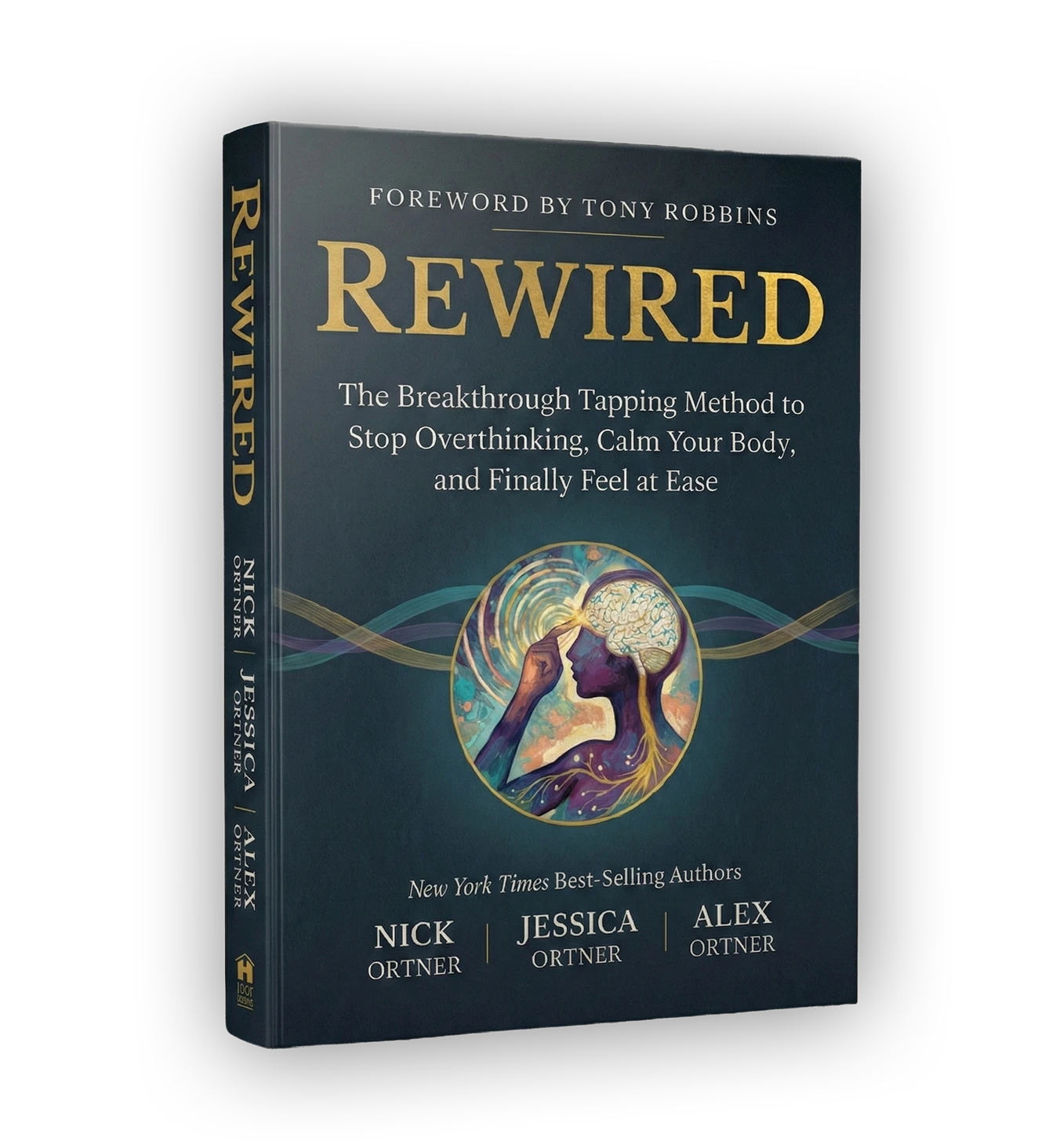
Recommended for self-criticism:From Rewired - Chapter 11: From Harsh to CompassionateThe inner critic convinces you it's keeping you safe. In reality, it's keeping you small. It's time to recognize it for what it is—a pattern, not the truth—and rewire your relationship with yourself.
We explain how the inner critic is a nervous system pattern—not your true voice—and the exact process for rewiring self-criticism into self-compassion.
This is the inner critic's favorite argument. It convinces you that without its constant vigilance, you'll fall apart. But research shows the opposite is true. Self-compassion actually leads to greater motivation and resilience than self-criticism. When you're not paralyzed by fear of failure, you take more risks. When mistakes don't trigger a shame spiral, you learn from them faster. The inner critic doesn't make you better—it just makes you scared.
Affirmations try to overwrite negative beliefs with positive statements. The problem is, your nervous system doesn't believe them. When you say "I am worthy" but feel worthless, there's a disconnect that often makes you feel worse. Tapping works differently. Instead of fighting the inner critic or trying to replace it with positive thoughts, you acknowledge what you're actually feeling while calming your nervous system. This allows the emotional charge to dissipate naturally, making space for genuine self-compassion to emerge—not as something you're forcing yourself to believe, but as something that finally feels true.
Many people notice a shift within a single session—the inner critic's voice becomes quieter, less urgent, less convincing. Our "Quieting the Critical Voice" session shows an average 3.0 point reduction (from 7.0 to 4.0) in a single session. For deep-seated patterns that developed in childhood, consistent practice makes a bigger difference. Each time you tap, you're weakening the old neural pathways and strengthening new ones. Over time, self-compassion becomes your default response instead of self-attack.
That's actually very common. When self-criticism is your normal mode, it doesn't feel like criticism—it feels like accurate self-assessment. You might notice: perfectionism, fear of making mistakes, difficulty accepting compliments, constant comparison to others, or a general feeling of "not being enough." The sessions guide you to notice these patterns. Often, people are surprised to discover how harsh their self-talk actually is when they start paying attention to it.
This can happen—and it's actually a sign you're onto something important. The inner critic can feel threatened when you start to challenge it, and may get louder temporarily. The key is to tap ON that resistance: "Even though my inner critic is getting louder right now, I'm open to the possibility that it doesn't have to run my life." Keep Tapping through it. The intensity usually passes, and what's on the other side is often profound relief.
Important Notice: The Tapping Solution App is intended for general wellness purposes, including stress management and emotional wellness support. It is not intended to diagnose, treat, cure, or prevent any disease or medical condition. If you have been diagnosed with a medical or mental health condition, please consult with your healthcare provider. This app is not a substitute for professional medical advice, diagnosis, or treatment.