Sugar Cravings
30,134 sessions completed
Average drop from 6.5 to 3.2 intensity. Users report being able to walk past sweets without the usual pull, and when they do indulge, enjoying less without feeling deprived.
Try this session →You know that feeling. The craving hits, and before your rational brain catches up, you've already done it again. The snack. The drink. The scroll. The cigarette. The thing you promised yourself you'd stop.
And then comes the shame spiral. What's wrong with me? Why can't I just stop?
Here's what nobody tells you: habits and cravings aren't a willpower problem. They're a nervous system problem. Your brain created these patterns to cope with stress, boredom, or pain—and it will keep running those patterns until you give it something different.
These are stories from people who finally broke the cycle—not by fighting harder, but by rewiring the stress response underneath the habit.
I realize it's not a food item that I was craving—it was for something emotional. Now I eat and taste the full flavor of my food.
— Ashanti K., App UserImportant Notice
Tapping can be a helpful complement to professional treatment for addiction and habit change. If you're dealing with substance dependency, please work with qualified healthcare providers. The Tapping Solution App is designed for general wellness and is not intended to replace medical or addiction treatment programs.
Every habit follows the same loop: trigger - craving - behavior - reward. Your brain learns this loop so well that it becomes automatic. The trigger fires, and your nervous system runs the program before you can think.
That's why telling yourself "I won't do it this time" rarely works. By the time you're white-knuckling through the craving, your stress response is already activated—and stress is often what created the habit in the first place.
Tapping interrupts this cycle at the nervous system level. Instead of fighting the craving (which creates more stress), you tap on the stress underneath it. The craving often dissolves because you've addressed what was actually driving it.
Recognize the moment the craving hits. Notice it without acting on it.
Interrupt with Tapping before the automatic behavior takes over.
Rewire your response so the same trigger produces calm instead of craving.
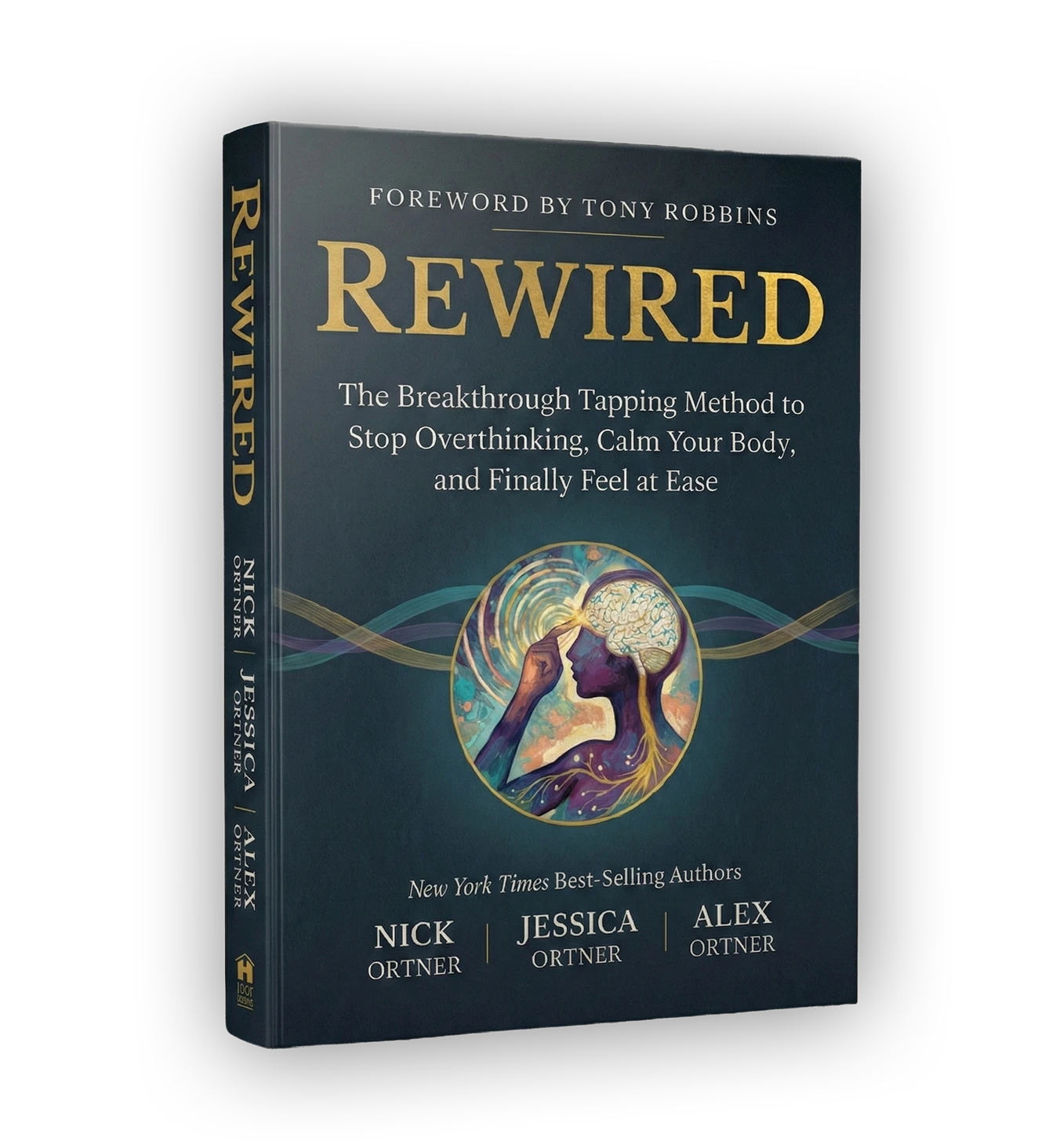
From the REWIRED framework: "You're not broken. You're not weak. You're just wired a certain way. And wiring can be changed."
Understanding the brain science helps explain why Tapping works when willpower doesn't.
When you're stressed, your brain releases cortisol. Elevated cortisol increases cravings for sugar, alcohol, and other quick-fix substances. This isn't weakness—it's biochemistry.
Here's the cycle:
Tapping breaks this cycle by reducing cortisol directly. Studies show Tapping can reduce cortisol by 43% in just one hour. When cortisol drops, cravings often lose their grip.
The research: A Harvard Medical School study showed that Tapping calms the amygdala—the brain's alarm center. When your alarm isn't constantly firing, you don't need as many coping mechanisms to quiet it.
This is why so many people report that after Tapping, they can "take or leave" the thing they used to feel controlled by. The craving doesn't have to be white-knuckled into submission—it simply becomes less urgent.
The Tapping Solution App includes targeted sessions for different types of cravings and habits. Here's what real users are experiencing:
30,134 sessions completed
Average drop from 6.5 to 3.2 intensity. Users report being able to walk past sweets without the usual pull, and when they do indulge, enjoying less without feeling deprived.
Try this session →13,470 sessions completed
Average drop from 6.1 to 3.0 intensity. Many users find this helpful for cutting back rather than going cold turkey—reducing the emotional charge around drinking decisions.
Try this session →9,707 sessions completed
Average drop from 6.5 to 3.2 intensity. Users often combine this with other stress-relief sessions, addressing both the craving and what's triggering the urge to smoke.
Try this session →3,272 sessions completed
Average drop from 6.3 to 3.1 intensity. Designed to complement medical treatment—not replace it. Users in recovery programs find it helpful for managing the emotional aspects of detox.
Try this session →Cravings are often about emotion, not the substance. Ashanti's insight—"it was for something emotional"—is one of the most common breakthroughs. You are not your actions. Self-compassion creates space for change; shame keeps you stuck. Fear of change is real—sometimes the habit feels safer than the unknown. Short sessions work. You don't need an hour—sometimes 2 minutes is enough to break the loop. The goal isn't perfection—it's progress.
You're not broken. You're not weak. You're not destined to repeat these patterns forever. You're just wired a certain way. And wiring can be changed.
— From Rewired
You don't have to fight your cravings forever. Start with one session and notice what shifts.
These are the sessions that helped Ocean, Mary, and thousands of others finally break free from unwanted habits.
Recommended for habits & cravings:From Rewired · Chapter 10: Finding Your Flow AgainYou're not broken. You're not weak. You're not destined to repeat these patterns forever. You're just wired a certain way. And wiring can be changed.
We explain how habits are nervous system patterns—not character flaws—and the exact process for rewiring your default responses.
Willpower relies on your prefrontal cortex—the rational, planning part of your brain. But habits and cravings are driven by deeper, more primitive brain structures that evolved to ensure survival. When these two parts of your brain compete, the survival brain usually wins. That's why you can know exactly why you shouldn't do something and still do it anyway. Tapping works by calming the stress response that drives the craving, so you're not fighting against your own nervous system.
Tapping can be a helpful complement to professional addiction treatment. It's particularly useful for managing cravings, processing emotions that drive addictive behavior, and calming the nervous system during recovery. However, addiction is a complex condition that often requires professional support. Tapping works best as part of a comprehensive approach that may include medical treatment, therapy, support groups, and lifestyle changes. Always work with qualified healthcare providers for addiction recovery.
Many people notice a reduction in craving intensity within a single session—often within 5-10 minutes. In our app, the Sugar Cravings Buster shows an average 3.3 point drop (from 6.5 to 3.2), and many users report the craving becoming "take it or leave it" rather than demanding. For lasting habit change, consistent practice matters. Each time you tap through a craving instead of acting on it, you're building a new neural pathway. Over time, this new response becomes your default.
This is completely normal and expected. Habit change isn't linear—it's a process of gradually building new patterns while old ones fade. One slip doesn't erase your progress. The key is what you do after: instead of shame (which creates more stress, which triggers more cravings), tap on the slip itself. Process the disappointment, frustration, or self-judgment. Then tap on what triggered the craving in the first place. This keeps you moving forward instead of stuck in a shame spiral.
Before: Tap proactively at times when you typically experience cravings. This can preemptively calm your nervous system and reduce the craving before it fully develops. During: This is often most effective. When you notice a craving building, tap through it immediately. The quicker you intervene, the easier it is to shift the pattern. After: If you gave in to the craving, tap on any shame or frustration. Also tap on what you were actually seeking (comfort, relief, connection) to address the underlying need.
Important Notice: The Tapping Solution App is intended for general wellness purposes, including stress management and emotional wellness support. It is not intended to diagnose, treat, cure, or prevent any disease or medical condition. If you have been diagnosed with a medical or mental health condition, please consult with your healthcare provider. This app is not a substitute for professional medical advice, diagnosis, or treatment.