You've tried to manage it. Suppress it. Push it down. But anger has a way of leaking out—as irritability, passive aggression, sudden explosions, or that tight knot in your chest that never quite goes away.
Anger held in the body creates chronic tension, health issues, and damaged relationships. But expressing it doesn't always help either—you can't yell at your boss or scream at traffic.
These stories are from people who finally learned to release anger—without suppressing it or letting it explode. They found a third way.
I'm learning to be curious about my anger and shift it out of my body quickly. I chose to love and respect myself and send them love.
— Eithne, Releasing AngerAnger is a survival emotion. When you feel threatened, your body mobilizes to fight—heart rate increases, muscles tense, stress hormones flood your system. This response evolved to protect you.
The problem is, in modern life, we often can't express anger fully. You can't fight your boss. You can't yell at traffic. So the activation gets stuck. Suppressed anger doesn't disappear—it gets stored in the body as chronic tension, contributes to health problems like high blood pressure, and often leaks out as irritability or sudden explosive outbursts.
Traditional anger management teaches you to control anger. Tapping helps you actually release it—processing the charge so it doesn't keep building up inside you.
Over 261,000 "Releasing Anger" sessions completed. Users report an average 3.2 point drop in intensity—nearly half the emotional charge dissolving in a single 10-minute session.
Based on in-app data from the primary Releasing Anger session (ID: 46).
Many people discover through Tapping that anger is a "secondary emotion"—meaning it often covers something more vulnerable underneath:
Tapping often reveals these deeper layers, allowing for more complete healing than just "managing" the anger on the surface. When you tap on anger and tears come—like Jennifer experienced—that's usually the real issue finally getting acknowledged.
People don't just feel less angry—they feel more at peace. They describe physical tension releasing, especially in their chest, jaw, and shoulders. The common thread: anger often has something underneath it. When Tapping helps release the surface anger, what's revealed is often the real issue—hurt, fear, or disappointment that needed acknowledgment.
Anger is often just the bodyguard for pain. When we tap, we acknowledge the anger while also giving the underlying hurt a voice. That's when real healing happens.
— Nick Ortner, Rewired
You don't have to carry it forever. Start with one session and notice what shifts.
These are the sessions that helped Jennifer, Eithne, and over 300,000 others finally release the anger they'd been carrying.
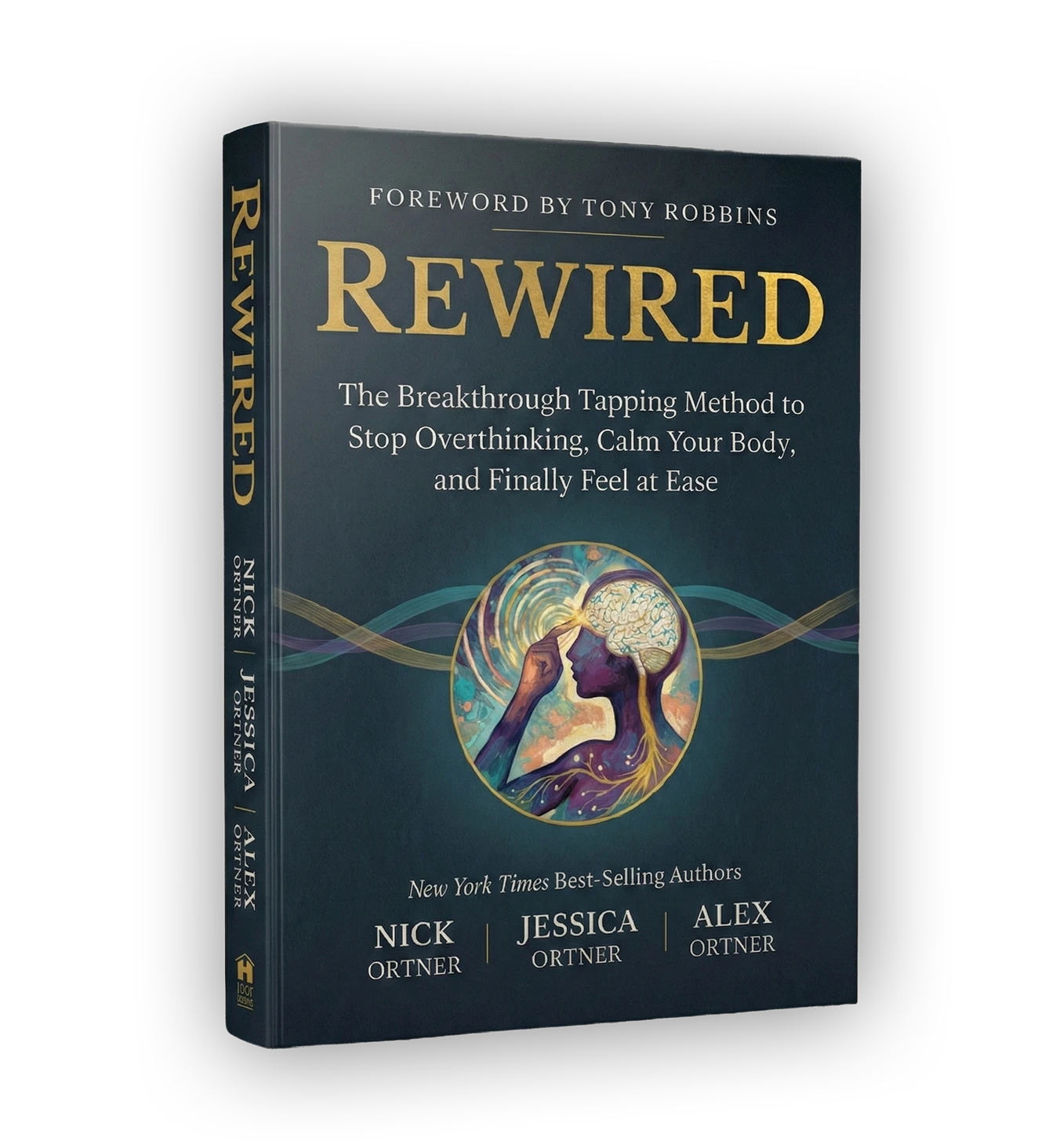
Most popular for anger: Try the App FreeFrom Rewired · Chapter 6: Processing FrustrationWhen we don't process frustration and anger, it doesn't disappear. It accumulates. It shows up as chronic tension, irritability, health problems. Tapping gives your nervous system what it's been waiting for—a way to complete the stress cycle.
We explain the neuroscience of why anger gets stuck and the exact Tapping process for releasing it without suppressing it or letting it explode.
This is a common concern. Traditional advice says "don't dwell on negative emotions." But suppression doesn't work—the anger stays in your body, creating tension and eventually leaking out. Tapping is different from dwelling. You acknowledge the anger while simultaneously calming your nervous system through the Tapping points. This combination allows the emotional charge to process and release, rather than building up. Most people feel relief within minutes.
Sometimes anger is completely appropriate. Someone violated your boundaries, treated you unfairly, or caused real harm. Tapping doesn't mean pretending it was okay or that you shouldn't be angry. Instead, Tapping helps you process the physiological activation so you can: think clearly about how to respond, set boundaries without being reactive, take action from a grounded place rather than rage, and choose not to carry the physical burden of holding onto anger. You can release the anger without condoning what happened.
Traditional anger management teaches you to control anger—count to 10, walk away, use "I" statements. These are useful skills, but they don't address the underlying nervous system activation. Tapping works at the physiological level. By stimulating acupressure points while focusing on the anger, you send a calming signal to the amygdala. This actually processes the emotion rather than just managing the symptoms. Many people find that after consistent Tapping, they simply don't get as angry in the first place—the trigger loses its charge.
Long-held anger can feel permanent, like it's just part of who you are. But even decades-old anger responds to Tapping. The key is consistency—each time you tap, you're reducing the charge a little more. Start with one specific incident or person that triggers your anger. Work on that until the intensity drops. Then move to the next. Over time, you'll notice the overall anger level decreasing as you process the accumulated charge. Many people report that situations that used to infuriate them now barely register.
This is actually very common and usually a good sign. As Jennifer experienced, anger often has hurt underneath it. When the anger softens, the tears can finally come. Let them. The tears are processing the deeper emotion that the anger was protecting. Keep Tapping through it. What's on the other side is usually profound relief—like Jennifer's experience of going from 8 to 0 and feeling "relaxed, peaceful and smiling."
Important Notice: The Tapping Solution App is intended for general wellness purposes, including stress management and emotional wellness support. It is not intended to diagnose, treat, cure, or prevent any disease or medical condition. If you have been diagnosed with a medical or mental health condition, please consult with your healthcare provider. This app is not a substitute for professional medical advice, diagnosis, or treatment.